

Sustainability has become a much bigger part of conversations around sport and teamwear recently.
A few years ago, it was usually only a small number of clubs or event organisers that were asking about recycled fabrics or more environmentally-conscious products, but now it’s far more common. Sponsors ask about it, governing bodies increasingly expect it, and players, runners and participants are generally far more aware of the environmental impact of what they wear and use.
There are certainly more options now than there once were. Recycled polyester, recycled medals and rPET accessories are all far easier to source than they were even five years ago.
But despite all the marketing around sustainability, in practice it’s rarely as straightforward or simple as it may appear to be.
The following is a practical look at sustainability in teamwear, and some of the seemingly smaller decisions that can genuinely make a difference.
The balancing act behind every order
Whether it’s football kits, running tops, cycling jerseys or event merchandise, most people are usually trying to balance four main things:
- Quality
- Cost
- Lead time
- Design
And honestly, we know that juggling those four is hard enough already.
Most clubs and events just want kit that looks good, arrives on time, lasts well and fits the budget . If you add sustainability to the mix, it can make things even more complicated.
- Recycled materials can increase costs.
- A cheaper garment may not last as long.
- Tighter deadlines can carry a bigger transport impact.
There usually isn’t a perfect solution that scores top marks in every area. That’s simply the challenge of custom sportswear and merchandise.
What “sustainable” actually means in practice
A lot of sustainability conversations can sound quite complicated, but the basic reality is fairly simple: all manufacturing has an impact, including sportswear and merchandise.
Most technical sportswear is made from polyester. Even when that polyester is recycled, there’s still work involved. Plastic bottles have to be collected, sorted, cleaned and turned into fabric, while recycled zinc for medals also has to be processed before products can be manufactured and shipped.
So yes, recycled materials are generally better than starting from scratch but they aren’t impact-free; they’re simply a better option within a much bigger picture.
And that’s really the point. Sustainability is rarely about one single material or decision. It’s usually the result of lots of smaller choices around manufacturing, transport, durability, ordering quantities and how long products actually stay in use.
Where the biggest difference is really made
Some of the biggest sustainability wins are often the most overlooked ones, and one of them is all about making products that people actually want to keep using.
If a T-shirt loses shape quickly, fades after a few washes or just isn’t very comfortable, it tends to get thrown away, replaced sooner or sits in the bottom of a drawer. The same goes for medals, hoodies and other merchandise. If something feels disposable, it usually becomes disposable.
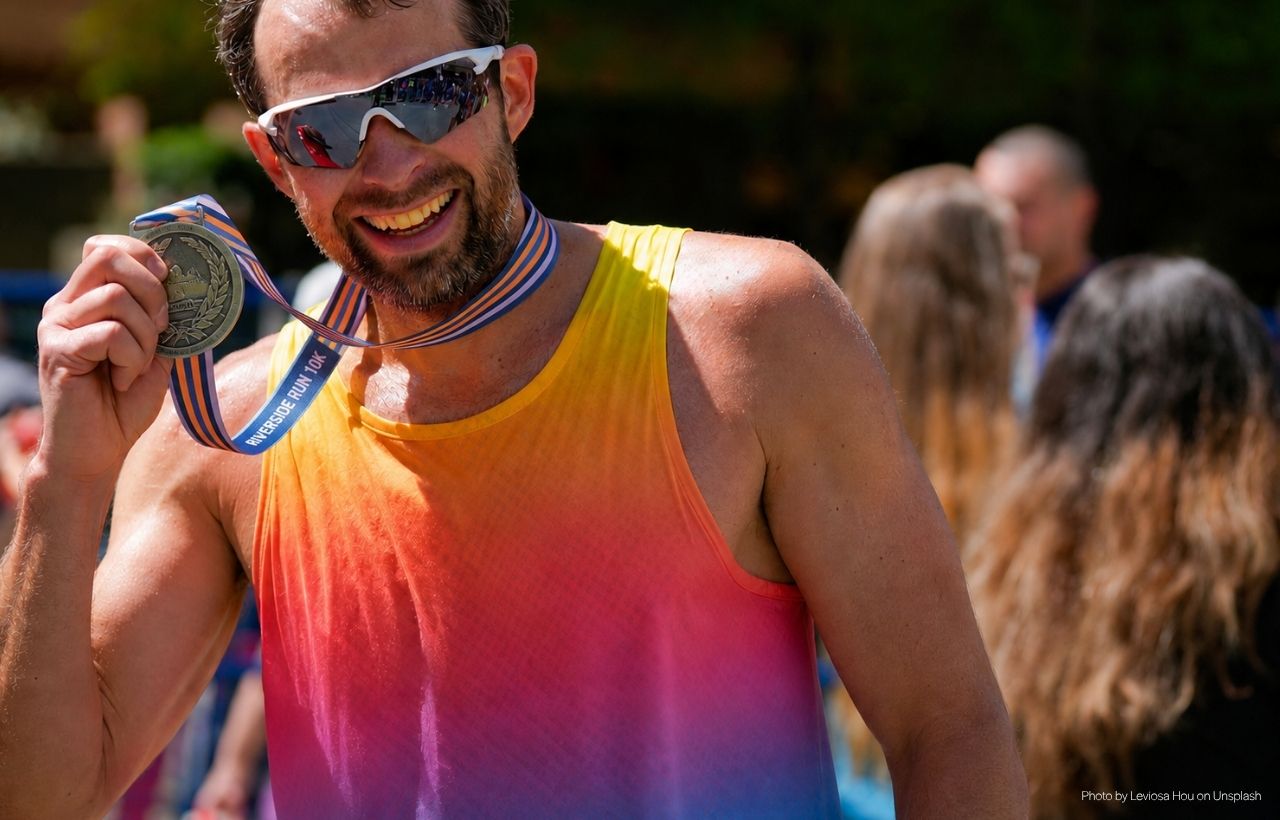
Finisher T-shirts that are worn again and again after race day, medals that become keepsakes rather than clutter, and football jerseys that are genuinely cherished all tend to stay in use for far longer.

Why planning ahead matters for events
For events especially, deadlines can have a big impact on transport decisions. A race date or event weekend is fixed, so when timelines become tight, faster shipping methods can sometimes become unavoidable.
Sea freight generally carries a lower impact than air freight, so planning ahead can open up more flexibility around production and shipping.
The problem with “just in case”
Over-ordering is probably one of the biggest causes of waste in teamwear.
It’s understandable too. Nobody wants to run short before a season starts or an event takes place, and almost every club will recognise having had a box or cupboard full of spare shirts in sizes nobody ever seems to need.
Custom products already help because they’re made to order rather than mass-produced for shelves and warehouses, but quantities still matter. Ordering more accurately can often make a bigger difference than people realise.
A few extra shirts here and there might not feel like much at the time, but it all adds up.
Why custom kit can actually help
One advantage custom teamwear has over many retail ranges is continuity.
With retail sportswear brands, clubs can suddenly find that a particular shirt or range has been discontinued after a season or two. That often leaves teams with two choices: mix old and new kits together, or replace everything and start again.
Custom kit can avoid a lot of that hassle, cost and waste because designs can usually still be reordered long after the original launch, whether that’s weeks, months or even years later.
Being able to add to an existing kit over time often avoids a full kit replacement that simply wouldn’t have been needed otherwise.
Practical decisions that make a difference
A lot of sustainability conversations focus heavily on statistics, carbon footprints and headline claims, and those things do matter. But it’s also about far more practical decisions than treating it as a tick-box exercise.
- Avoid putting dates on lanyards unless they’re genuinely needed. Any extras are far easier to reuse later.
- If you’ll need additional club kit in future, think about how easy it will be to reorder matching items.
- Reuse event signage and banners where possible.
- Choose merchandise and kit people are likely to use again.
- Allow enough production time to avoid rushed transport.
- Avoid ordering large amounts of spare stock “just in case”.
- Can you feel the difference?
One question we get asked regularly is whether recycled polyester feels or performs differently from standard polyester.
In reality, people won’t notice any difference at all. The only change is where the polyester comes from. If you’re out on a run or the pitch, the look, feel and performance will be exactly the same.
Does the printing method matter?
It can do. Sublimation printing generally uses less water than many traditional dyeing methods and, because the colour dyes deep into the fabric rather than sitting on top, the prints don’t tend to crack or peel over time.
That matters because garments that stay looking good usually stay in use for longer too.
The bottom line
There isn’t one perfect answer to sustainability in teamwear. But there are better decisions, and many of them are fairly practical.
Across the wider industry, huge amounts of perfectly usable products still end up as waste every year. You only need to look at some of the widely-shared images of discarded clothing mountains around the world to see the scale of the problem.
Ordering more accurately, choosing well and avoiding unnecessary replacement can all make a genuine difference over time.
But the longer products stay in use, the less likely they are to become part of those waste mountains a few months later.
Appin Sports supplies custom teamwear and event merchandise.If you want straightforward, honest advice about kit options (including recycled fabrics and medals), event merch or ordering quantities for your club or event, just get in touch.
Common questions about sustainable teamwear
Is recycled polyester as good as normal polyester?
Yes. In terms of comfort, breathability and performance, most people won’t notice any real difference between recycled polyester and standard polyester sportswear.
Is custom teamwear more sustainable than retail sportswear?
It can be. Custom teamwear often allows clubs to reorder matching football kits, running kit and replacement garments later, rather than replacing an entire range because a retail product has been discontinued.
What makes the biggest environmental difference in teamwear?
Usually the practical things: ordering more accurately, reducing waste, choosing durable sportswear and creating products people genuinely want to keep using.
Does sublimation printing use less water?
Generally, yes. Sublimation printing typically uses less water than many traditional garment dyeing methods while also creating a durable finish that won’t crack or peel over time.
Is sustainable teamwear more expensive?
Sometimes. Recycled materials and certain manufacturing processes can increase costs slightly.


